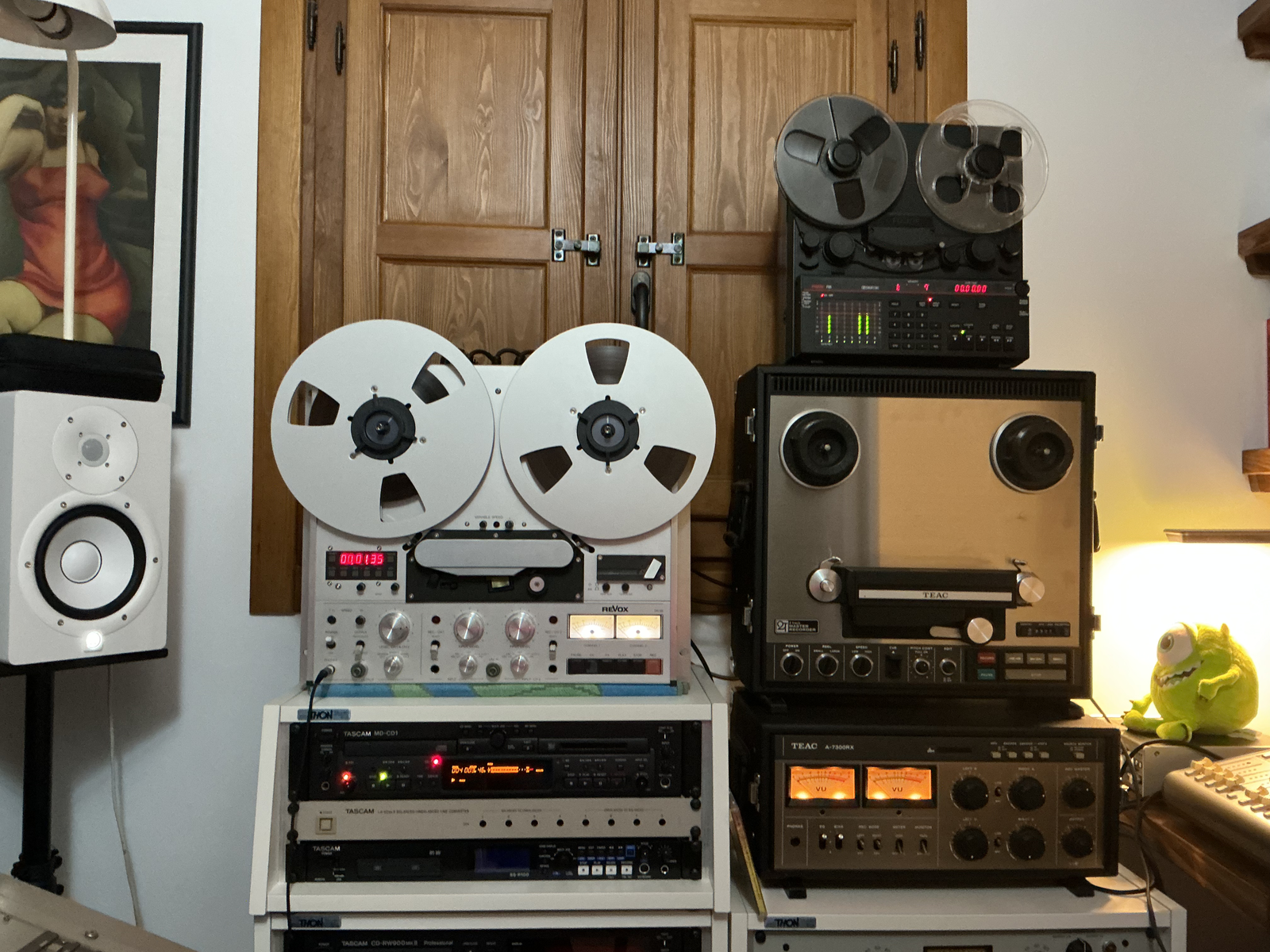





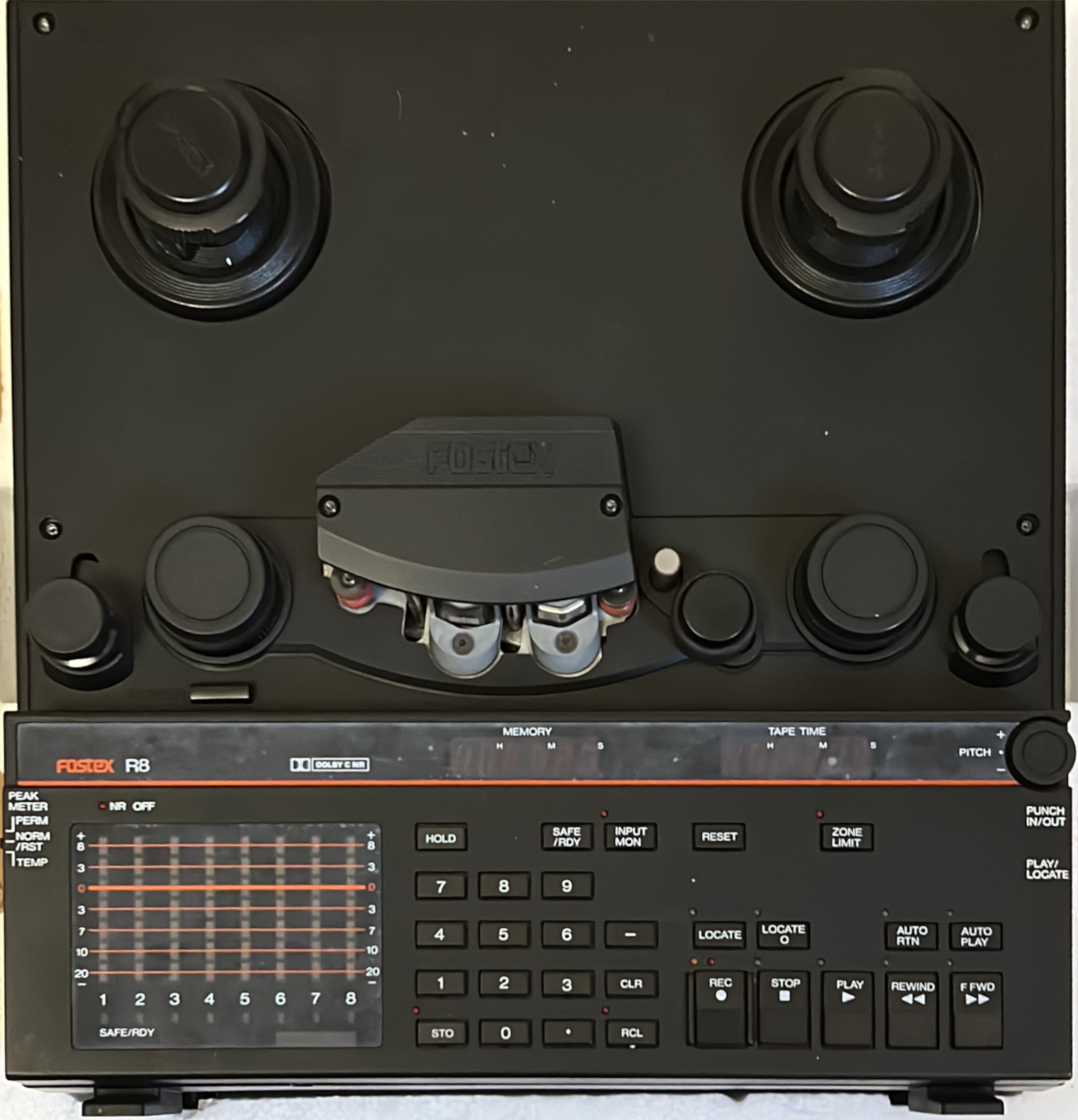
The machine currently on the workbench is one that many like to dismiss. The Fostex R8 crams eight tracks onto a quarter inch tape and does so with a combined record/playback head. Indeed, not the greatest advertisement for superior audio quality.
At the time, Tascam said it couldn’t be done, eight tracks onto a quarter inch. Fostex took up the challenge and proved them wrong. However, Tascam later upped the ante with its Portastudio 688 and the 238 Syncaset, shoehorning eight tracks onto the 0.15″ (3.81mm) width of a cassette tape.
Underestimated & Undersized
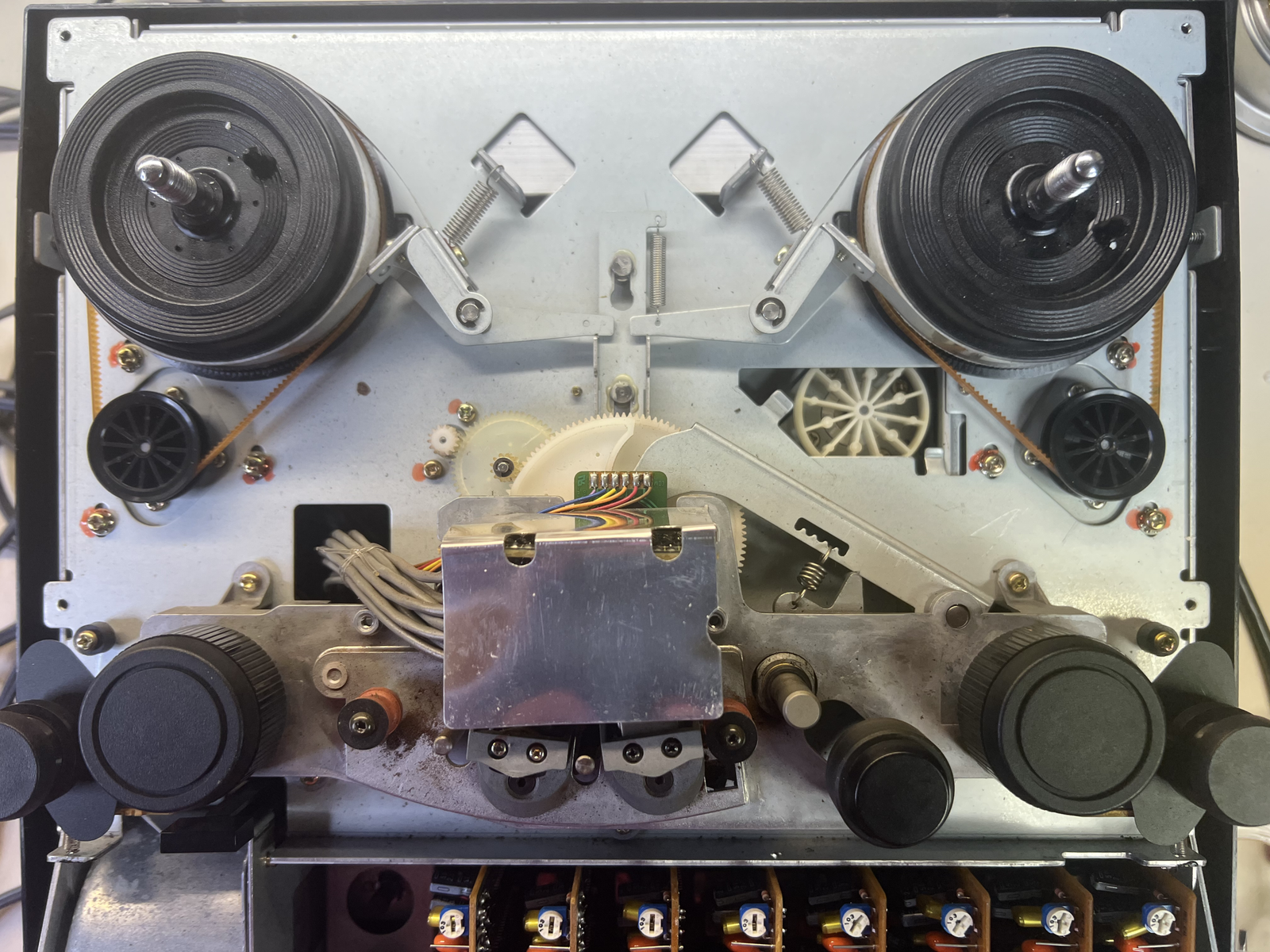
It would be a mistake to discard the R8 as a sonic disaster. Properly adjusted, this machine belies the naysayers. It performs a solid notch or two above its looks (and class). Sure, the R8 features lots of cheap plastic parts bolted onto a sheet metal frame. It possesses three rather undersized motors and rubber belts that go gooey with time.
That said, the Fostex R8 was never intended to compete with the big (and expensive) boys such as Revox/Studer or the hefty Tascams. Its closest competitor was the venerable Teac 80-8 which placed its eight tracks onto 1/2 inch tape.
Missing the Point
Sometimes the R8 has been snubbed as “a piece of plastic junk built like a 1990s VHS recorder.” However, that misses the point entirely. This is a mini machine squarely aimed at home recordists and musicians who wanted to produce demo tapes without going broke in the process.
Moreover, the Fostex R8 boasts a few remarkable features such as Dolby C noise reduction. The Teac 80-8 needs an external unit for DBX noise reduction, arguably casting a darkish veil over the sound while boosting the S/N ratio. The R8 also features a realtime counter with digital readout and a few basic locator functions.
In all, it constitutes a feat of note that Fostex managed to provide its R8 with loads of nifty features while keeping the price within reach of most enthusiasts.
Understandably, corners were cut to accomplish this but, then again, not everybody could (or can) afford the Revox C278 which in 1988 retailed for some €12,000. The R8 was launched in January 1989 at a price of just €1,600. Today, used units are much sought after and change hands for up to €800.
The Issue
The Fostex R8 sitting on the ReelTape workbench suffers from a degraded erasure depth. The service manual has a few things to say about that:
- Recording a 1kHz sine wave at +10dBvu should result in an erasure depth of -70dB.
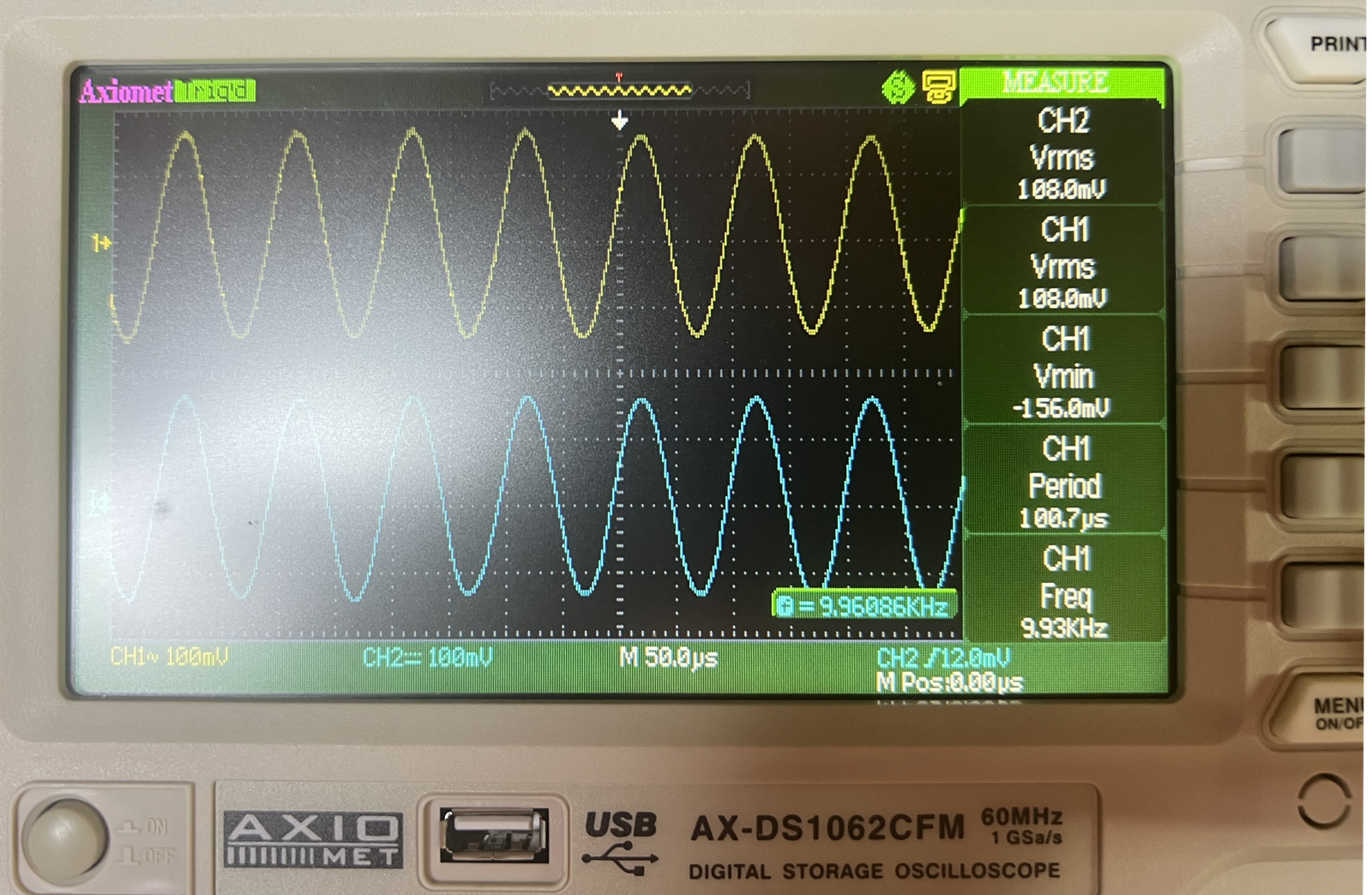
- In case this depth is not obtained after a thorough cleaning of the erase head, the output of the oscillator may be increased by up to 10% by adjusting R106 on each channel to reach 90mVp-p at test point 6. Before this the core of T1 (oscillator) should be adjusted for maximum voltage at TP6.
However, before I start on the oscillator, I shall want to check the record and playback level and the bias setting on each channel.
RTFM
Reading the manual can save time. I noted that an input on channel 1 results in a readout on both channels 1 & 5 – weird until I discovered that the linkage is not a bug but a feature. This machine latches pairs of channels internally (1-5, 2-6, 3-7, 4-8) by default. Once you put unbalanced cinch plugs into inputs 5 to 8 this internal link is broken, allowing access to all eight channels/tracks.
Levels
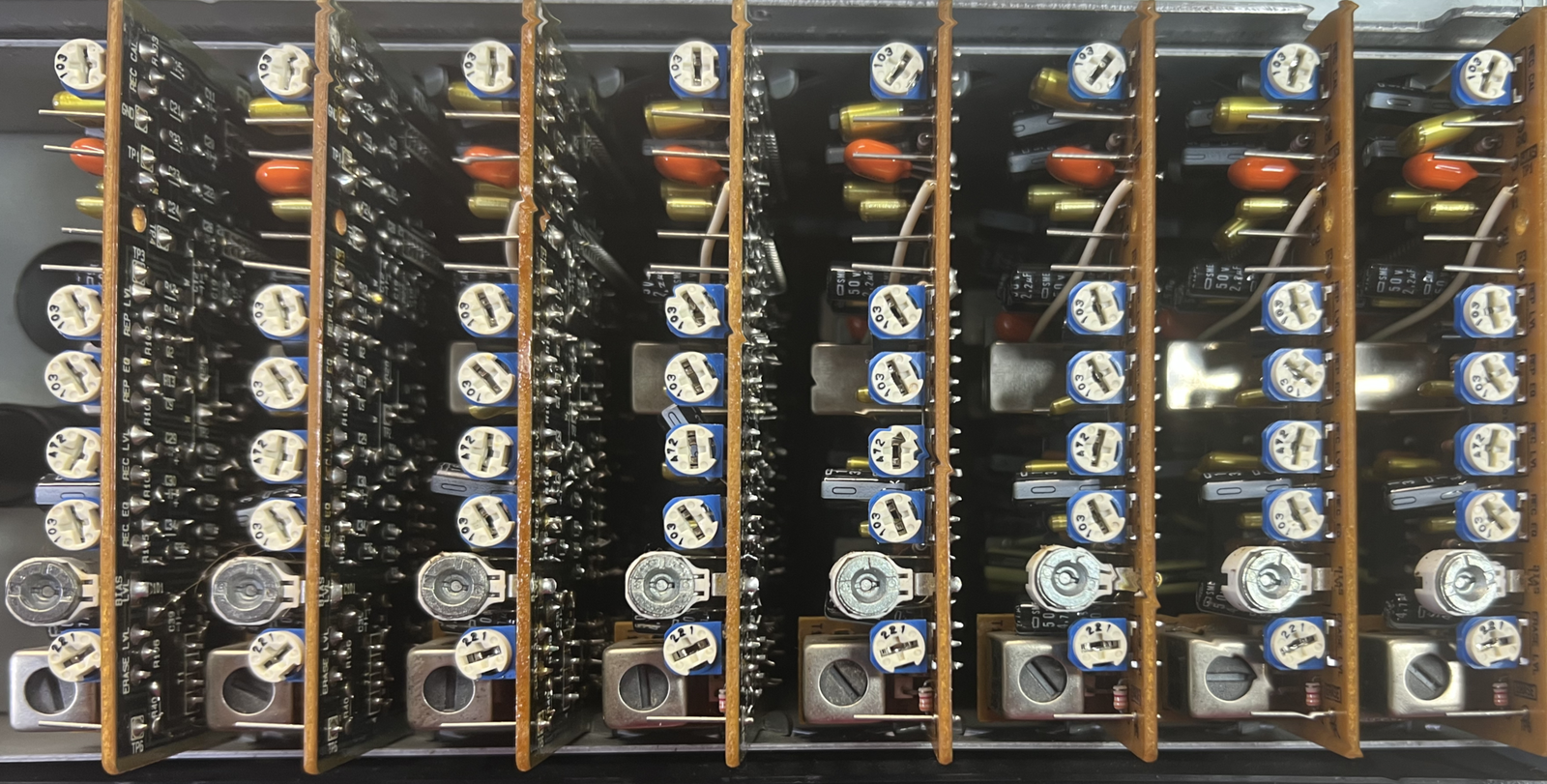
The meter level adjustments, set annoyingly on the main interconnection board (R107 to R807), were spot-on. Not so the REC CAL (input level) that is supposed to produce -12.2dBV (245mV) at TP4 for -10dBV (300mV) at the main output. All 8 channels were off by a significant margin.
Next up, the REP CAL (playback level). Loading an alignment tape, after first demagnetising the tape path, it again showed levels all over the place. Adjustment was, however, a piece of cake. The REP EQ was corrected next with 10kHz and 16kHz. Once adjusted, tracks 1 to 7 were nicely flat and stable with only track 8 on the bottom fringe of the tape making the VTVM needle swing +/- 2dB. Nothing to worry about though since this track hangs on rather precariously to the very edge of the tape.
To help address the erasure issue noted by the machine’s owner, the output of the oscillator was set to slightly over 90mVp-p (@100kHz).
Setting the proper bias on recorders with a combined record/playback head is notoriously laborious since it involves recording a tone, rewinding the tape, and measuring the playback signal. Luckily, Fostex was kind enough to provide a few test points and suggested voltages to be attained. As I would do with any recorder in the absence of a bias level table, bias was adjusted to -4dB beyond its peak level on all tracks.
Finally, the recording level and equalization was set for the eight tracks/channels with the surprising result that everything snapped into place with the frequency response showing just a 1 to 2 decibel fluctuation from 40Hz to 18kHz at a level 10dB below the rated output on the jacks of -10dB.
Running tests with saturated tape (+10dB) produced no ‘ghost’ sounds; just a noise floor of some -55dB. This makes perfect sense as Fostex puts the weighted noise floor at (a rather preposterous) -78dB. However, this reference a +10dB recording with Dolby C switched on. So, -55dB weighted is well within spec.
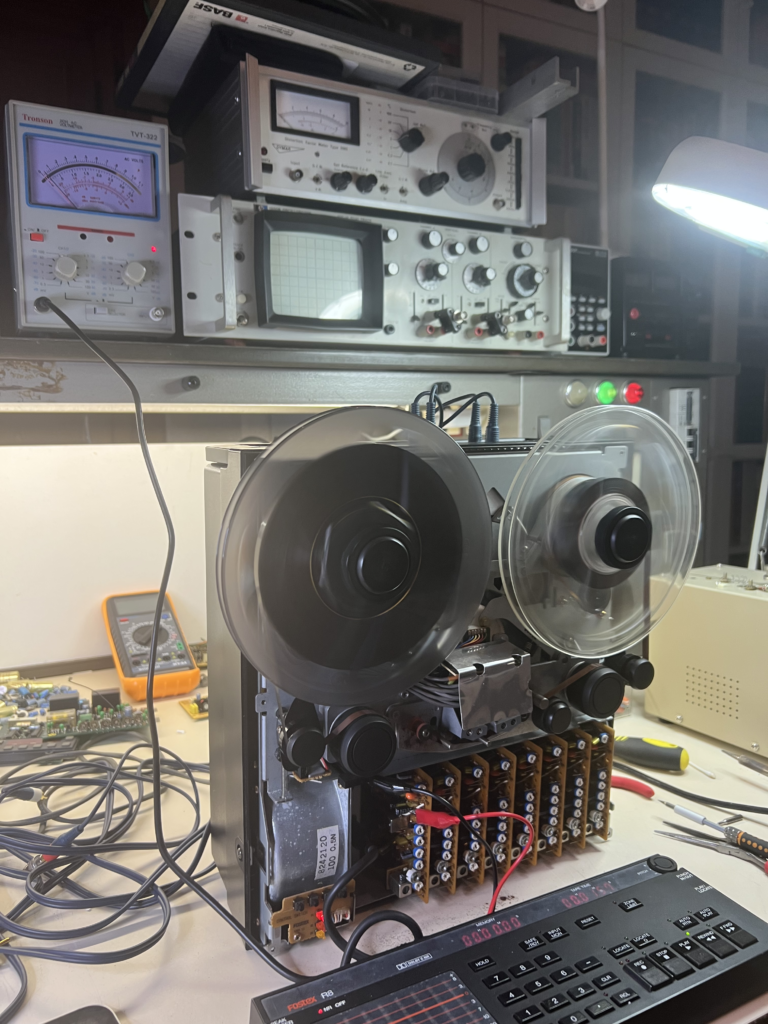
The Fostex R8 proved a pleasant machine to work on. It did not require any replacement parts. The owner, Sonic Studios in Padul (just south of Granada), Spain, had put the Fostex in storage after a mere 20 hours of use, disappointed at the presence of ‘ghost’ sound on recordings.
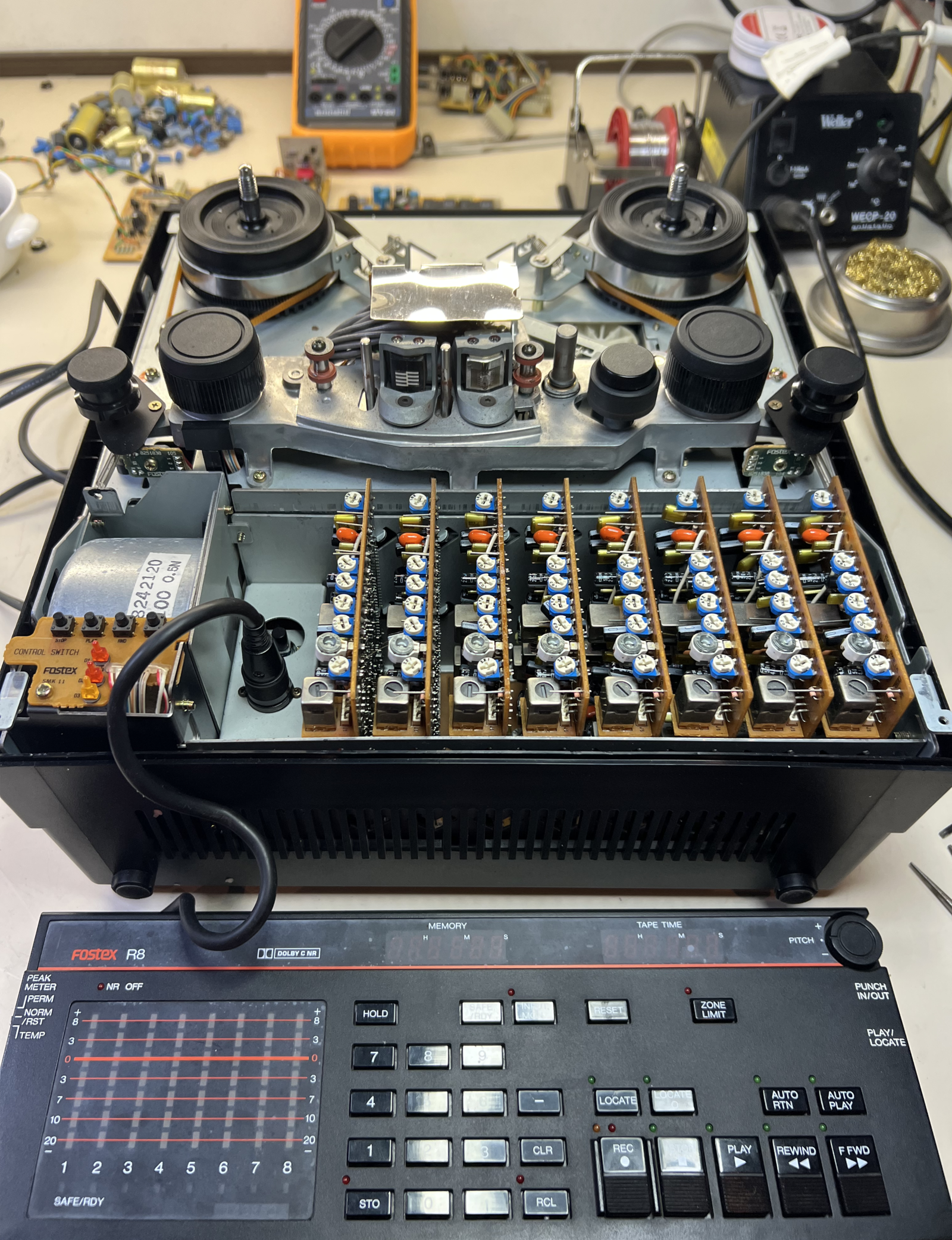
Work Done
- Adjustment of both tape guides and reel tables for friction-free tape travel
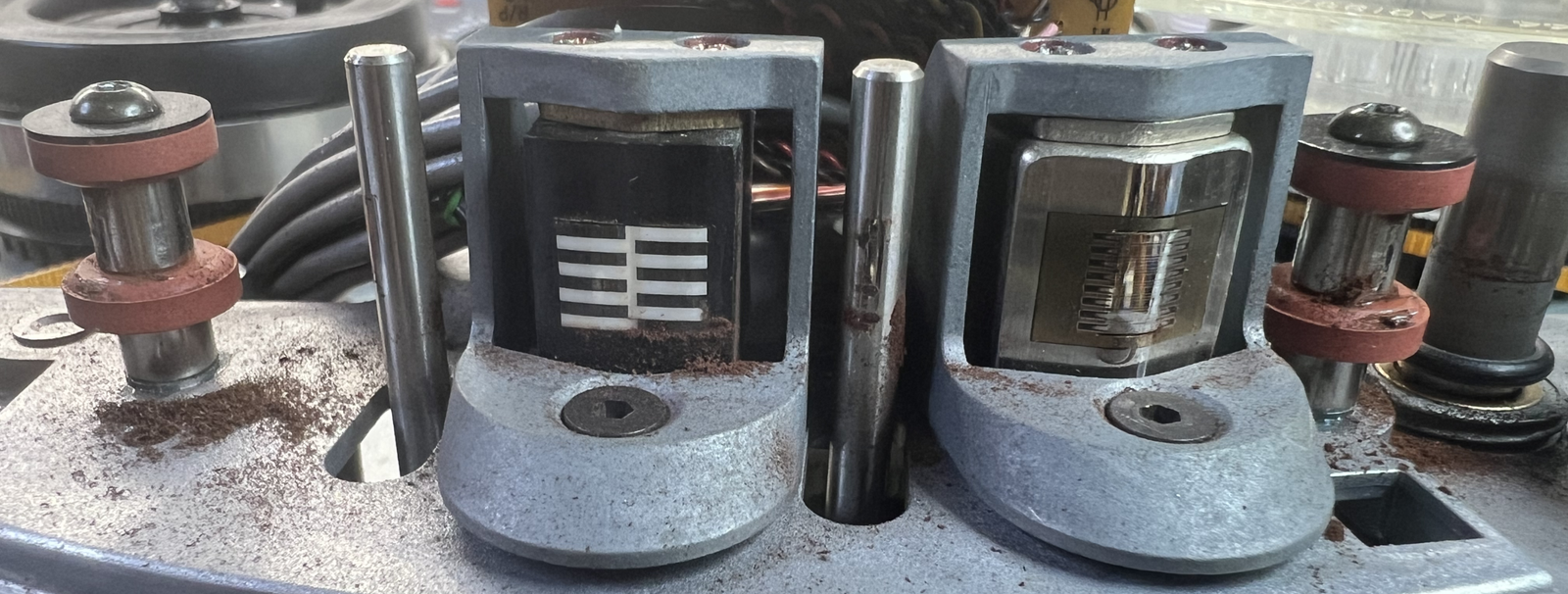
- Thorough cleaning of the two heads
- Setting the correct azimuth of the combined record/playback head
- Applying a drop of PDP 65 oil for the capstan motor
- Setting reproduce levels and equalization for all 8 channels
- Setting the bias level, recording level, and record equalization for all channels/tracks
- Checking frequency response, distortion, wow & flutter, signal-to noise ratio, and erase depth for all channels
- Running the tape machine for about two hours in the ReelTape mastering studio