





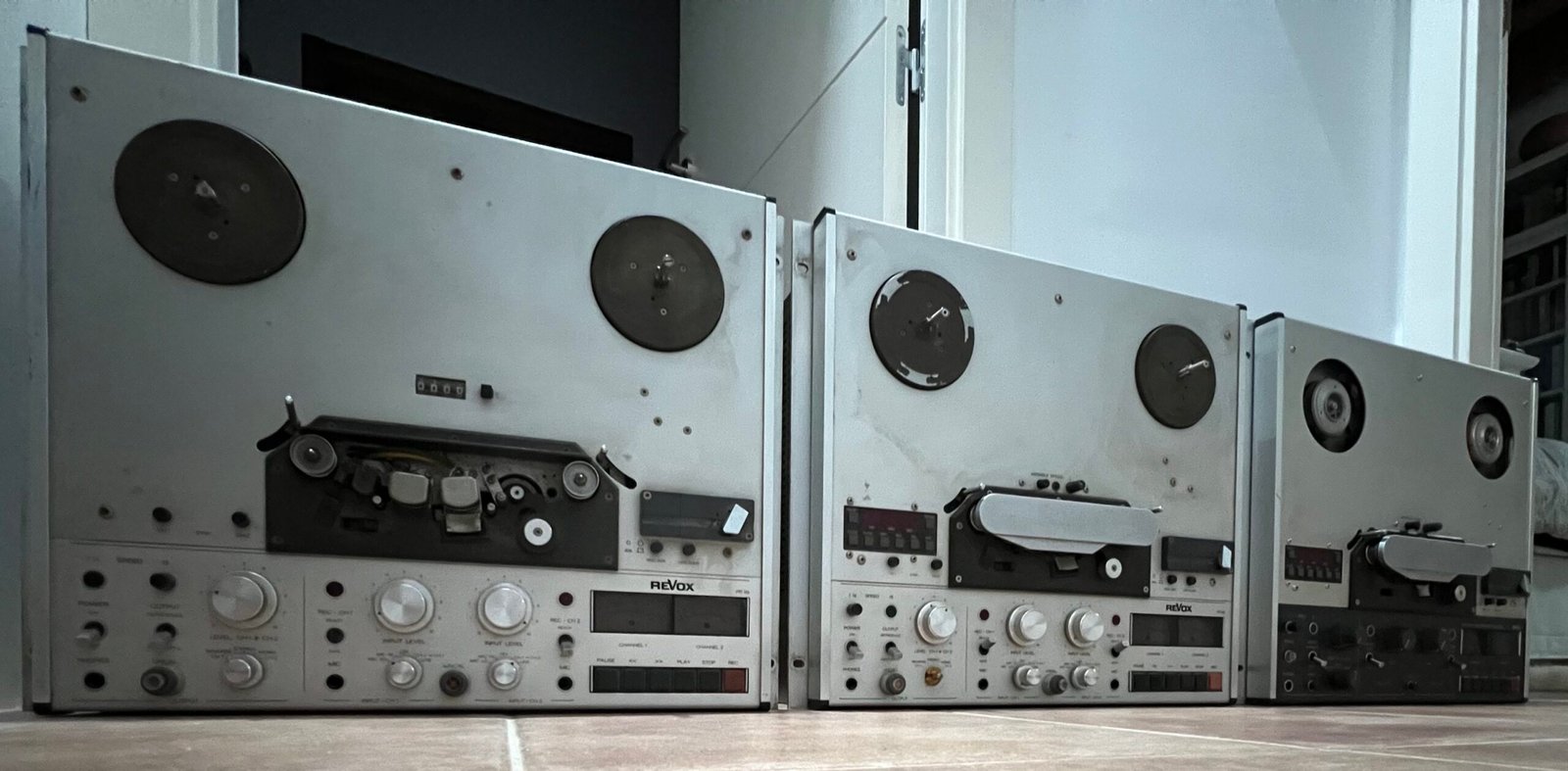
The Revox PR99, launched in 1982, is often dismissed as a glorified or pumped-up B77, the prosumer tape recorder that continued the trend set by the wildly successfull and revolutionary A77 starting in 1967. Together, these two models sold well over 670,000 units.

While outwardly the PR99 shares the looks and mechanics with the B77, it is an altogether different beast. Squarely aimed at the professional market, the PR99 was designed to fit into a more demanding environment.
The Studer/Revox brief to its engineers was simple: produce a reel-to-reel recorder that bridges the gap between the two brands. A recorder with Studer features at a Revox price point – and, of course, with the mandatory superior performance and reliability.
Radio Takes Flight in Europe
In the early 1980s, the company saw a golden opportunity in the sudden appearance across Europe of thousands of local commercial radio stations outside the realm of well-funded state broadcasters, the natural clients of Studer recorders. The new broadcasters needed recorders that were reliable and also easy to repair whenever out of commission. Studer/Revox was and remains a byword of reliability and serviceability.
Also, around this time high-priced and mostly German-made recording studio equipment got cometition from surprisingly well-built gear manufactured in the Far East, at a fraction of the cost. However, any small studio or radio station that wanted to be taken seriously needed to feature a Studer. Musicians were not likely to be impressed by a Tascam, Teac, or Otari recorder. Not that these machines were subpar but they simply lacked the gravitas of a Studer.
The Revox PR99 was designed, engineered, and built to fill this sizeable niche. In all some 65,000 machines were manufactured over a 15 year period (1982-1997).
Smart Move
The move to upgrade and professionalize the already proven B77 platform was nothing short of brilliant. Demand was even stronger than anticipated and PR99s quickly found their way into smaller broadcast studios not just in Europe, but in Africa, South America, the Middle East, and Asia as well. Sometime in the mid-1980s, the Revox PR99 had become nearly ubiquitous.
The machine even proved popular in North America where competitors such as Ampex, Scully, and MCI were on the retreat or going out of business altogether. In the US, smaller broadcasters and recording studios had less qualms than most Europeans about replacing their venerable Ampex machines with flashy Japanese recorders.
Thus the Revox PR99 turned into a brilliant marketing coup. It remains to this day, well over 40 years after its first appearance, a most remarkable, and almost indestructable, professional tape recorder able to outperform pretty much anything thrown at it; excepting, of course, Studer machines which inhabit rarified spheres and constitute a class all their own.
The PR99 came in three successive iterations.
PR99mkI
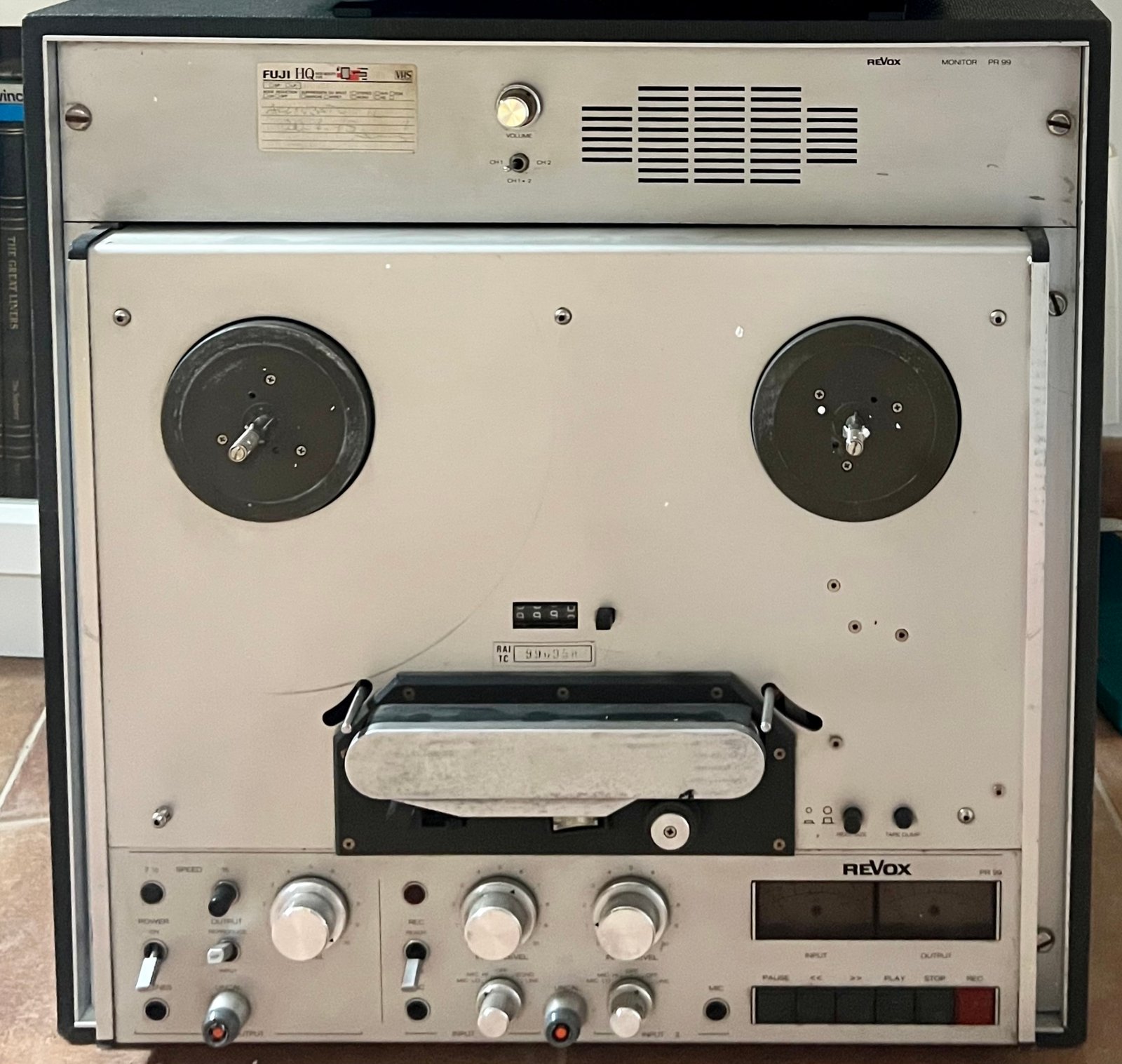
The PR99mkI kicked off the series with thoroughly revamped electronics that shared little if anything with the B77 platform. It featured transformer balanced inputs and +4dB outputs. The Mark I also allowed for sync recording and fader start. The front panel was made flush, allowing for easy access to the heads and facilitating both rapid tape lacing and editing. A ‘tape dump’ button was added, disengaging the takeup reel motor to enable unwanted tape fragments to roll off the machine and into a bin.
The PR99 added a second damper arm on the takeup side for smoother tape handling and, crucially, cal/uncal buttons on the recording and playback circuits enabling standardized levels to be monitored on the console rather than the recorder. In ‘cal’ mode, these buttons bypassed the in- and output volume controls. Moreover, Revox started employing Beyschlag and Philips board-level components that improved both sound quality and operational reliability.
PR99mkII
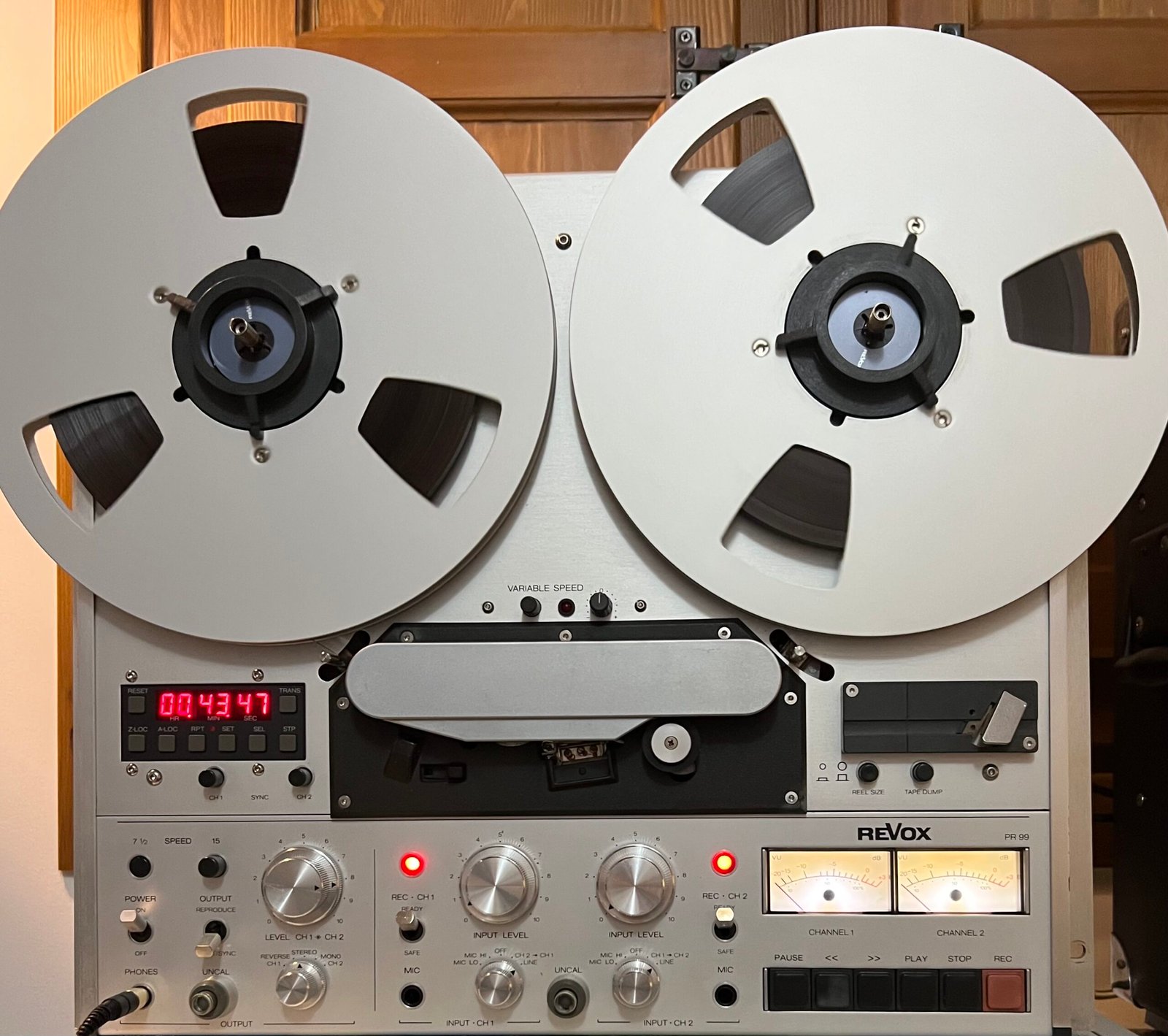
The PR99mkII, arguably the most celebrated version of the model, was actually inspired by ASC, a British pro-audio manufacturer and longtime purveyor of kit to the broadcast industry. ASC recognized that smaller broadcasters no longer employed studio technicians and instead put announcers and discjockeys at the controls.
However, the plethora of controls on the PR99s front panel just invited mistakes by non-techs. To address this issue, ASC took the PR99 and eliminated all non-essential knobs and switches from the machine. A new and rather barren lower front panel was installed to keep the cosmetics up.
ASC did not just take away features but introduced new ones as well. The company added a sophisticated micro-processor controlled digital tape timer with return-to-zero, address-locate, and loop features. It also added a small splicing block with an integrated cutter on the takeup side.
Studer/Revox couldn’t help but be impressed with the ASC mods and promptly incorporated them in the PR99 mark II, adding both cueing and incorporating an onboard varispeed facility with a range of two semitones.
More subtly, the Mark II also allowed for a slightly greater treble boost in the EQ network of the repro amp modules to compensate for the reduced high end frequency response of heads nearing the end of their (first) lifecycle.
Incidently, Studer/Revox advises to replace (today: relap and regrind) heads when the wear pattern reaches a width of 5mm – the exact width of the helpful indents on Revodur heads.The BBC, perhaps more frugal, allowed for 6mm.
With the PR99mkII, the model reached its apex. The Mark II remains the most desirable of the PR99s.
PR99mkIII
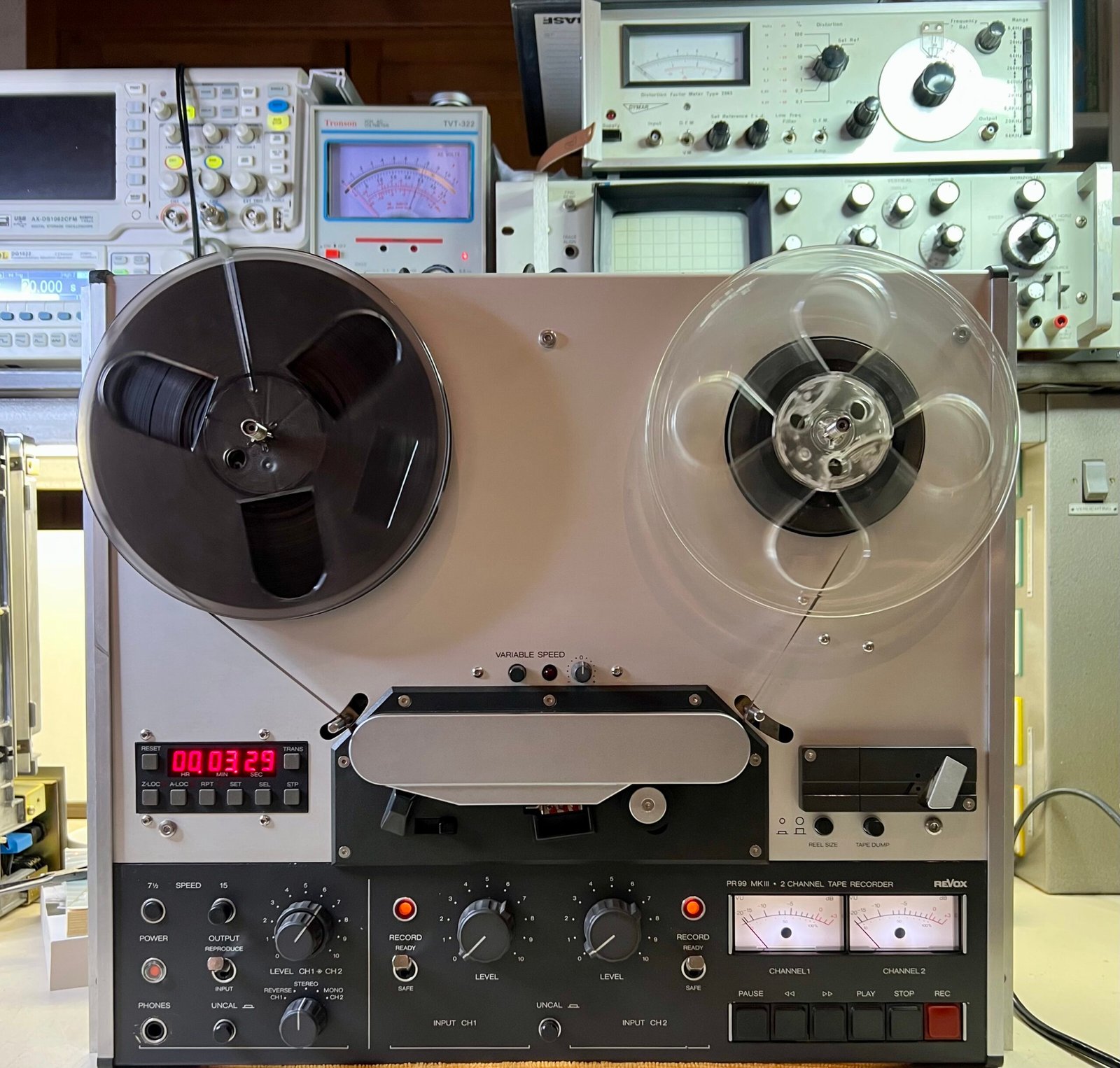
Feeling the heat of the digital audio revolution gathering steam, Revox launched the PR99mkIII in 1989. This last iteration of the machine is recognizable by the grey and sparingly populated lower front panel.
Sadly, the Mark III was essentially an exercise to cut (‘rationalize’) manufacturing costs. The input selector was done away with as was the sync function with its associated amp card and push buttons. The dedicated high-Z microphone inputs disappeared as well. The option to add low-Z balanced mic input was then also eliminated.
Electronically, changes included the widespread use of op-amps and J-FET switches. Mark III PCB modules could therefore no longer be swapped with Mark I and II printed circuit boards.
In every way, the PR99mkIII was the Revox swan song. Though rationalised, the version represents the very apex of Revox and moved into Studer territory without any reserves. It delivers a level of audio quality frankly unequaled by anything non-Studer.
The Curtain Falls
In 1997, a PR99mkIII was the last reel-to-reel recorder to leave the business end of the Revox assembly line in Regensdorf that had once pumped out 175 recorders per day.
The sad event also capped a 46-year-history of the company founded by Swiss electronics engineer Willy Studer that went on to design and build the world’s best (by a long shot) tape recorders.
Henceforth Revox would only manufacture unremarkable ‘lifestyle’ multi-room audio systems, coasting along on its name and reputation for a few more years before essentially folding and being taken over, albeit reluctantly, by Harman Kardon. That conglomerate was, admittedly, only interested in getting the Studer brand into its stable but had been forced to accept Revox as an unwanted child. The new owners allowed that child to wither and die.
A Critique of Reason
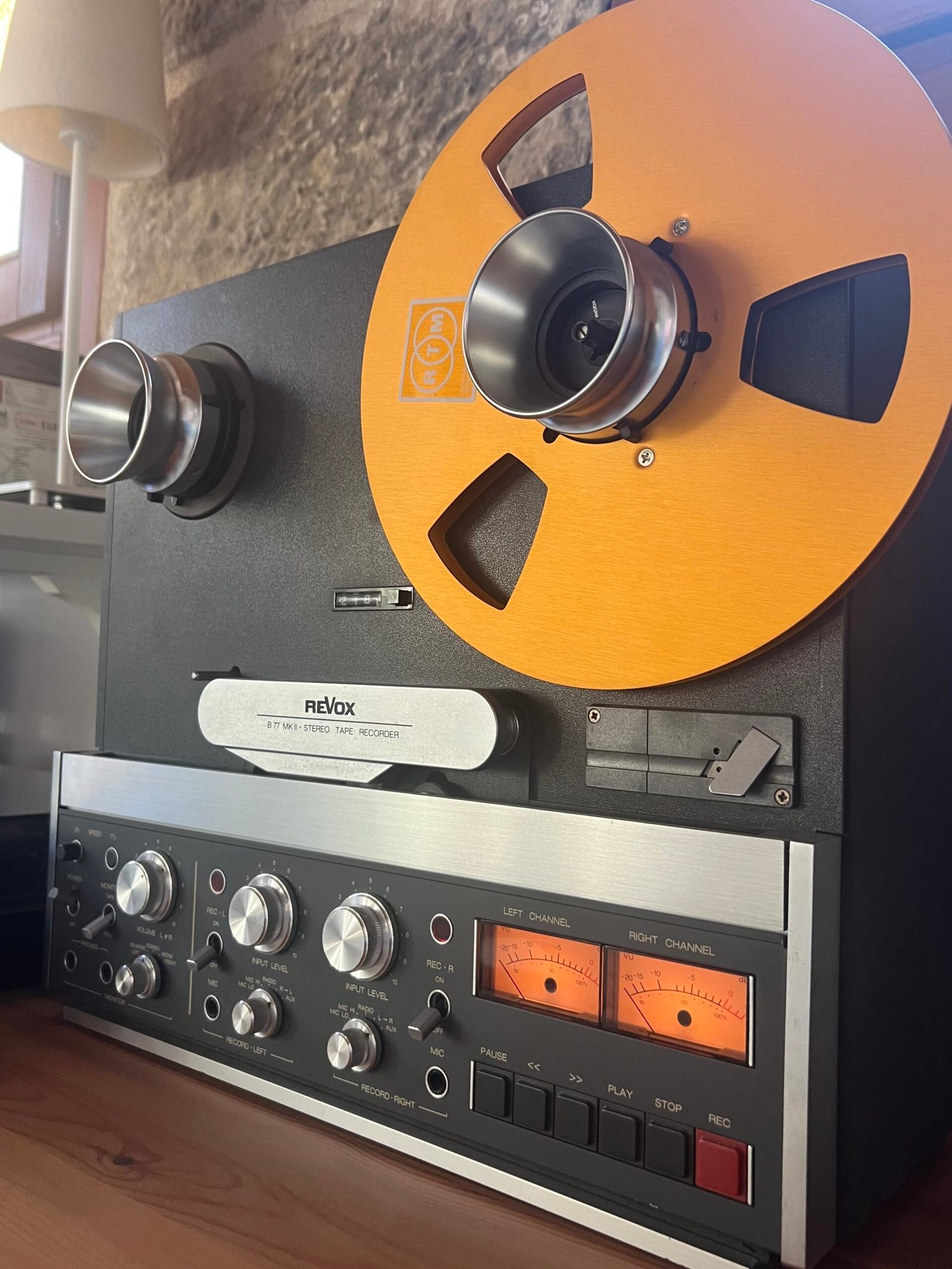
With no disrespect meant to Harman Kardon, but that hegemon of consumer electronics quite literally sucked the life and soul out of the Revox brand. And it now tries to sell under that same brand name a ‘new’ B77mkIII, filled with parts refurbished from original B77s it acquired wholesale on eBay-like platforms. This ‘re-issue’ is offered in a rather ridiculous ‘Alice Cooper’ or ‘Deep Purple’ edition for a stratospherical €27,000.
Helloooo…?
A completely restored, recapped, relapped, repainted (Nextel!!), re-everythinged B77mkII ought to cost no more than, say, €3,500 at a good push!
ReelTape can sell you one today for that price: one that is, moreover, guaranteed to equal or best the audio performance – on literally all parameters – of the €27K version.
Get a ReelTape-restored PR99mkI for the same money and feed Alice Cooper rather unceremoniously, albeit figuratively, to his snakes! Because what you see is … a snakeoil merchant at work! And for just about a thousand euros more, get a PR99mkII and leave all that in the dust.
The shameless marketing ploy to get audiophiles to pay tens of thousands of euros for a machine coasting on the reputation (wilfully discarded and ruined by the seller) has absolutely nothing to do with the relentless pursuit of quality or a passion for superior engineering as imposed and rigidly maintained by the late Willy Studer: it is but a naked money grab that seeks to cash in on a reputation made before the beancounters took power.
This constituted a most ignominious postscript to a once proud company that would back up and service its product essentially forever – economics be damned! BTW, just try to get Harman Kardon to service any device older than, say, five years.
In a cheeky ad from the 1970s Revox made the bold promise that the company would offer a lifetime warranty on all components of its recorders with the exception of only four items: the capstan axle, pinch roller, and the record and playback heads.
This was not an empty promise either. I can personally testify to this. I was servicing Revox G36s (the last of Revox valve-based recorders) in the late 1990s and early 2000s without any trouble whatsoever. All parts, up to and including the tiny felt washers between the input level controls and the rotary input selectors, were kept in stock for decades on end … and readily available at reasonable prices. Revox made machines built to not just last a lifetime, but to outlast multiple generations. I fully expect to pass on my dad’s original G36, bought new in 1964, to my grandson born in 2023.
Who does that…? Well, people with a passion for perfection. That is to say: people without MBA degrees!
Why the PR99?
ReelTape has become a major restorer of the PR99 with a continuously rotating inventory of ten or more machines. On average, one PR99 is restored every month. This is about the maximum ReelTape will want handle for each machine is taken apart (as in: no two pieces remain attached together) and rebuilt by hand from the ground up.
At ReelTape efficiency takes a backseat to passion. There is no clock to time the hours of labor that go into a restoration project. Who cares anyway: the sole motivation that drives ReelTape is to rescue and restore Studer/Revox tape recorders to their former glory – both performance wise and cosmetically – as they left the factory a great many years ago.
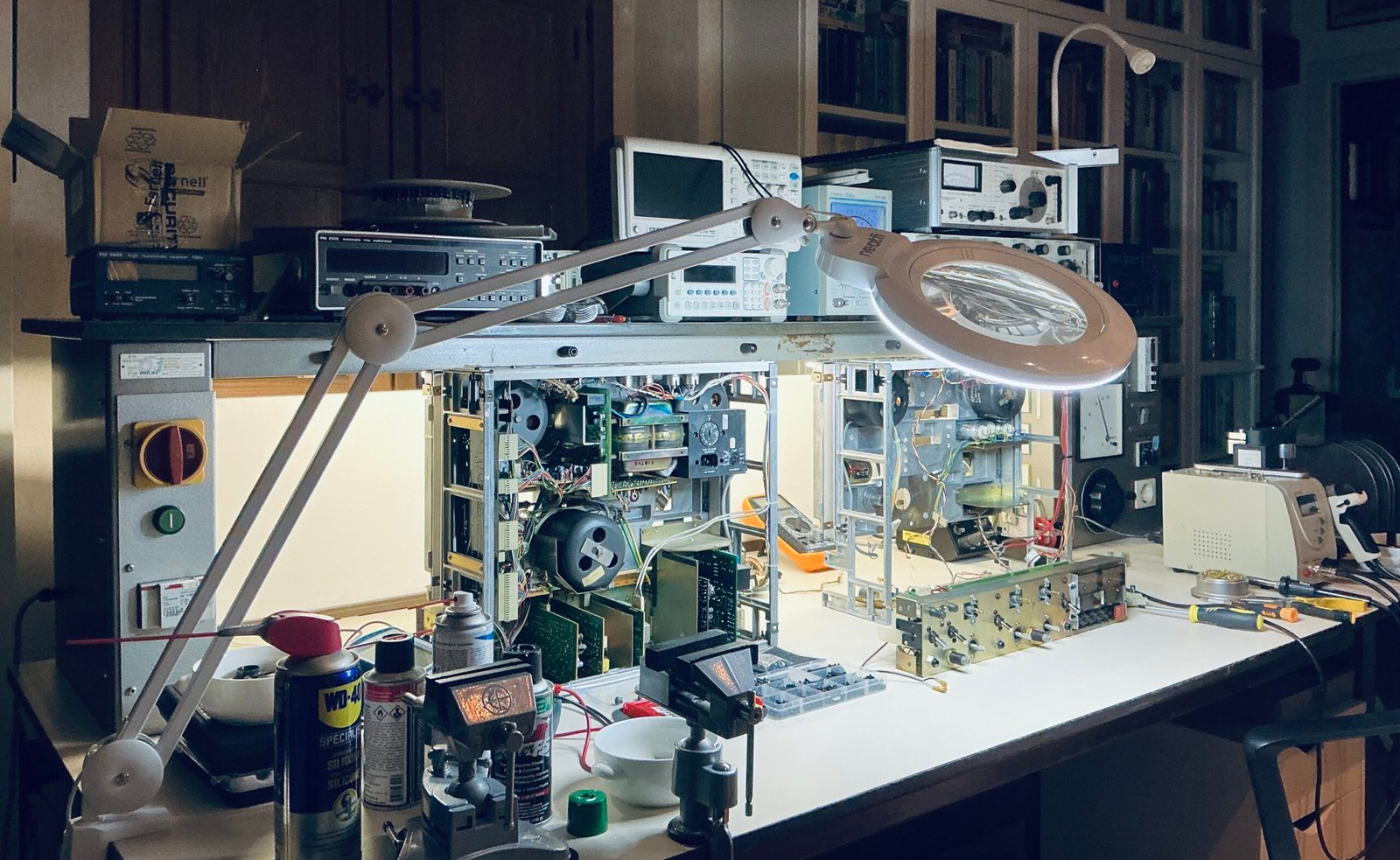
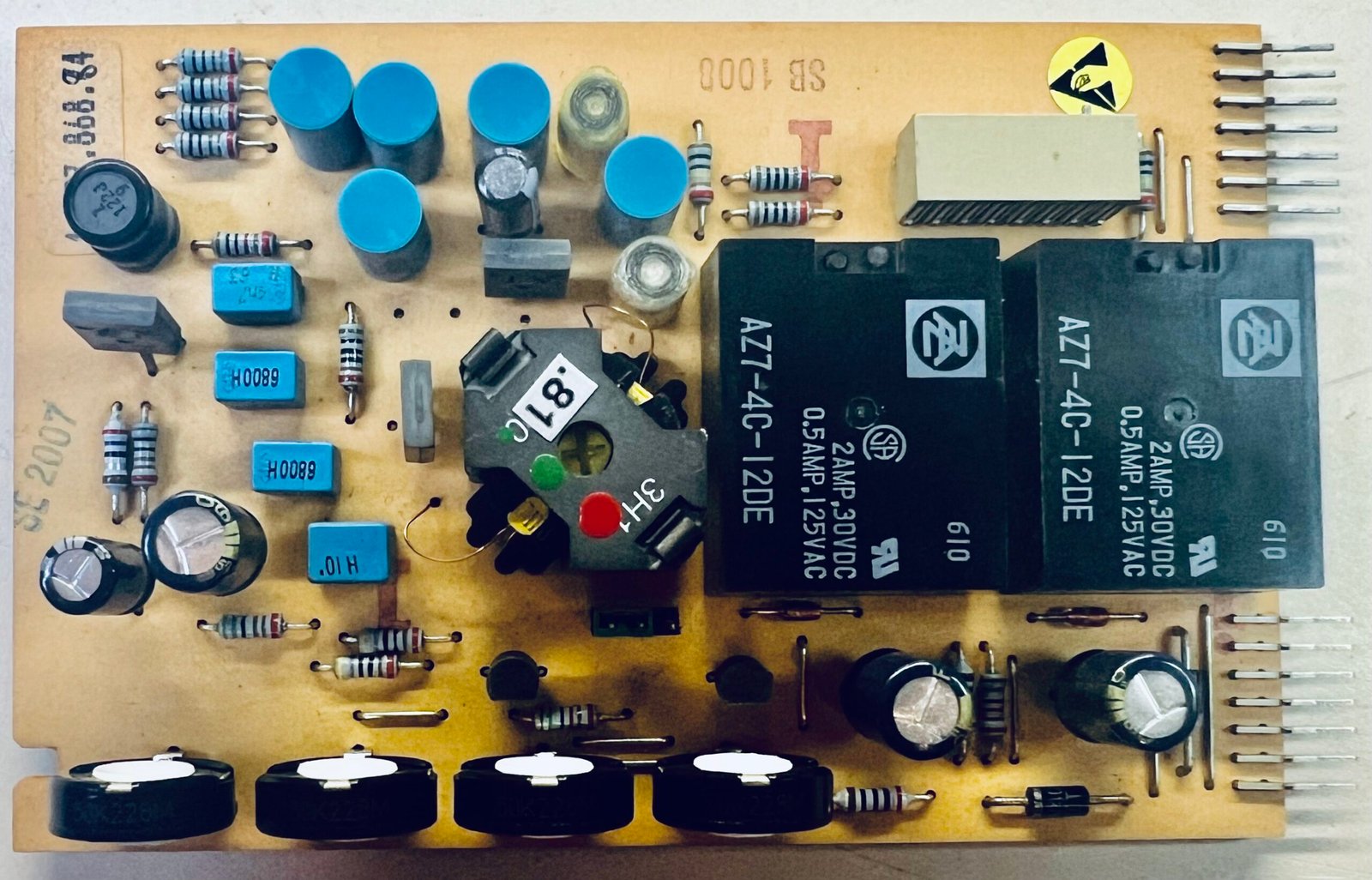
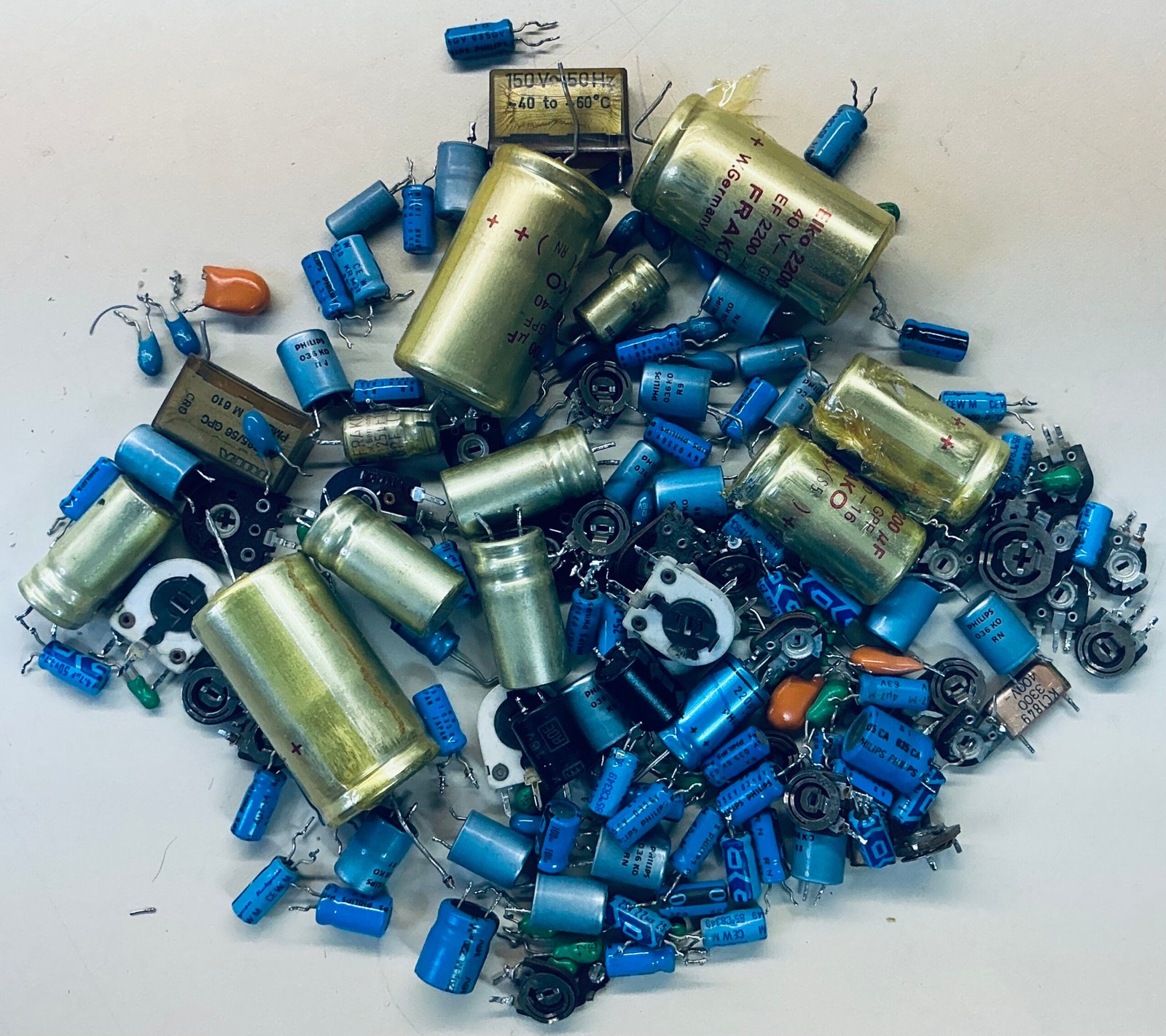
As may be overwhelmingly apparent, ReelTape specializes in the Revox PR99. Those machines have it all: superior reliability and performance fit for any recording studio regardless size. What’s not to love? Given its extended production run and volume, parts or their improved modern equivalents are readily obtainable.
PR99s also lurk everywhere. I have found discarded, neglected, and/or abused machines in barns, pigeon coops, and the attic of a farm house, hiding under layers of dust and shielded by cobwebs.
As reel tape is making a comeback of sorts, appreciation for the quality and longevity of Revox is on the rise. Younger people, growing up on digital audio, suddenly discover a rather mysterious recording medium that actually beats modernity hands down.
A Conundrum
This leads to the inevitable and unresolved conundrum of analog versus digital. I shall not want to wade into this often acerbic discussion but can only relate what I experienced.
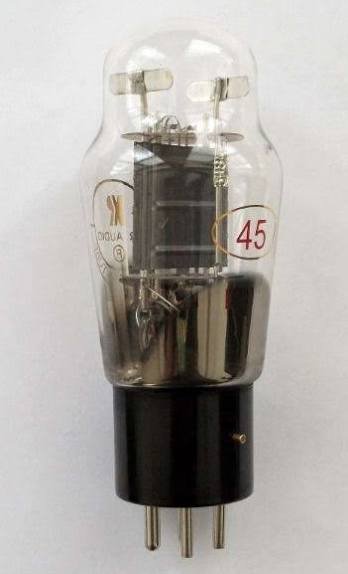
In 1995, I built a version of the Loftin-White amplifier using a basic design from the 1930s centered on a 45 triode output valve producing a whopping 2 Watt of power. The signal path comprised just four parts: an input resistor to ground plus valve (say, a 6SL7), a direct coupled output valve and an output transformer. That was it.
Measuring that amp for the usual parameters such as frequency response, distortion, etc gave rather atrocious results. One would think an old fashioned copper telephone line would beat it on specs. However, then you would hook this flea-powered “ampette” up to some really efficient speakers (say, Tannoy, Lowther, or a Klipschorn) and you’d be literally blown away by a massive soundstage raising the proverbial roof and akin to that guy in the Maxell ads of the 1980s. There was nothing quite like it.
This experience taught me a lesson both imporant and counter-intuitive: audio measurements do not tell the whole story.
It is the same with tape: sure, even cheap digital equipment seems far superior on spec yet somehow doesn’t sound ‘right’ to the discerning listener or musician. Analog media such as tape may not quite attain the specs of digital but, again somehow, usually sound much better and more natural.
However, this hold true only for serious analog such as Studer/Revox and a select few other top-end brands. Please do not expect a venerable 4-track Philips, Uher, or Tandberg to sound like a Revox.
Not for the Faint of Heart
Lastly, analog is significantly more complicated – and expensive – than digital. Users also need to put in a bit more effort for analog is by its very nature short on ergonomics. While you can play many tricks with analog, the technology is eminently unable to correct mistakes such as an off-beat drummer or an off-tone singer.
The take-away is that quality comes at a cost in financial terms and in dedication by both the user and the purveyor.
Though you cannot buy a brand-new Studer/Revox (lest you have the urge to bankroll Alice Cooper or Deep Purple), but you can get one that has been meticulously restored to as-new condition by ReelTape.