





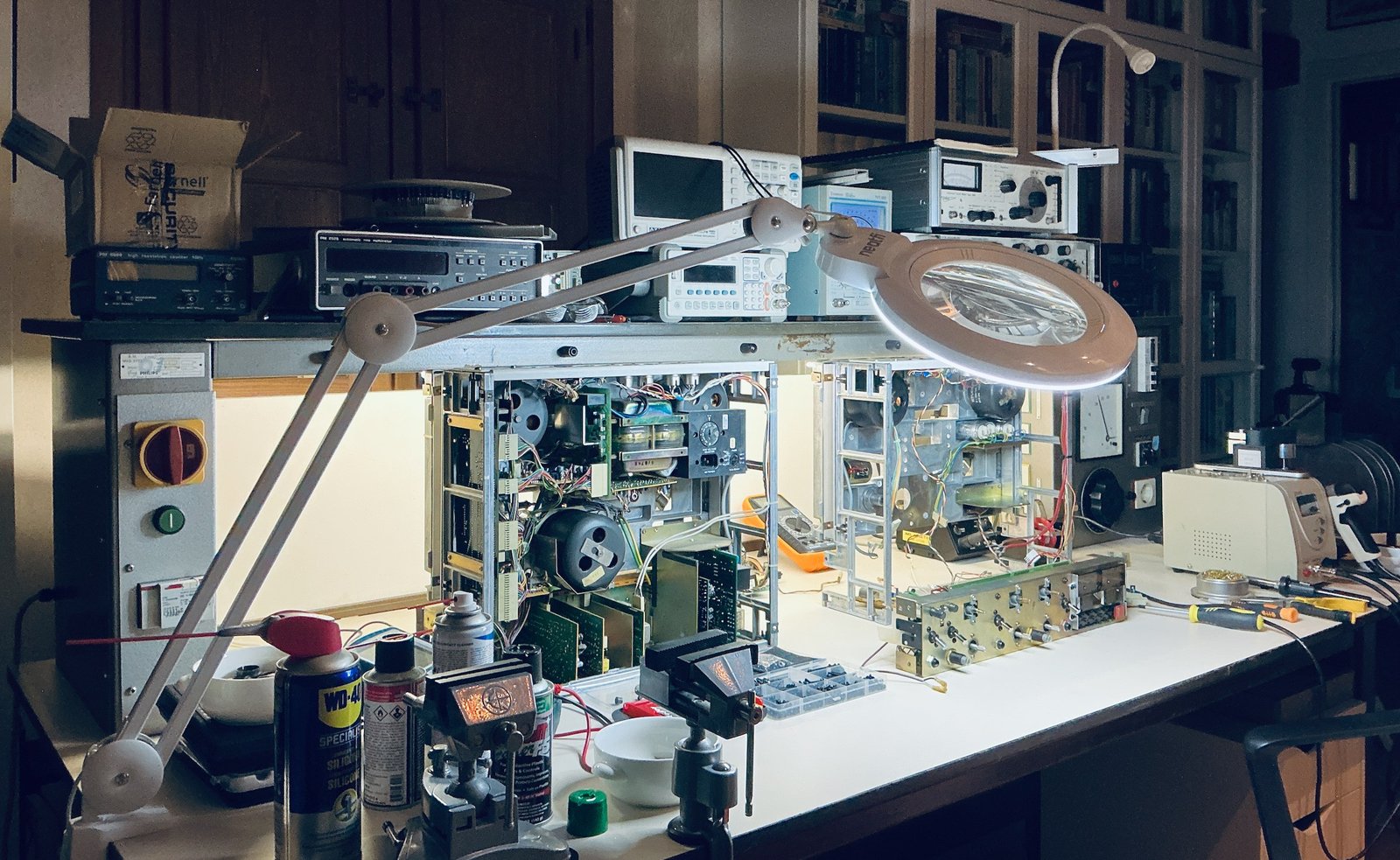
In order to assure a consistent quality and streamline the restoration process, each Revox or Studer tape recorder (and most others as well) that enters the ReelTape workshop undergoes the exact same procedure regardless overall condition or provenance.
- Recording, playback, and (oftentimes) erase heads are sent to Summertone in England for relapping and regrinding its curvature/contour. This optimises head-to-tape contact and ensures that the heads are in like-new condition, ready for thousands hours of service.
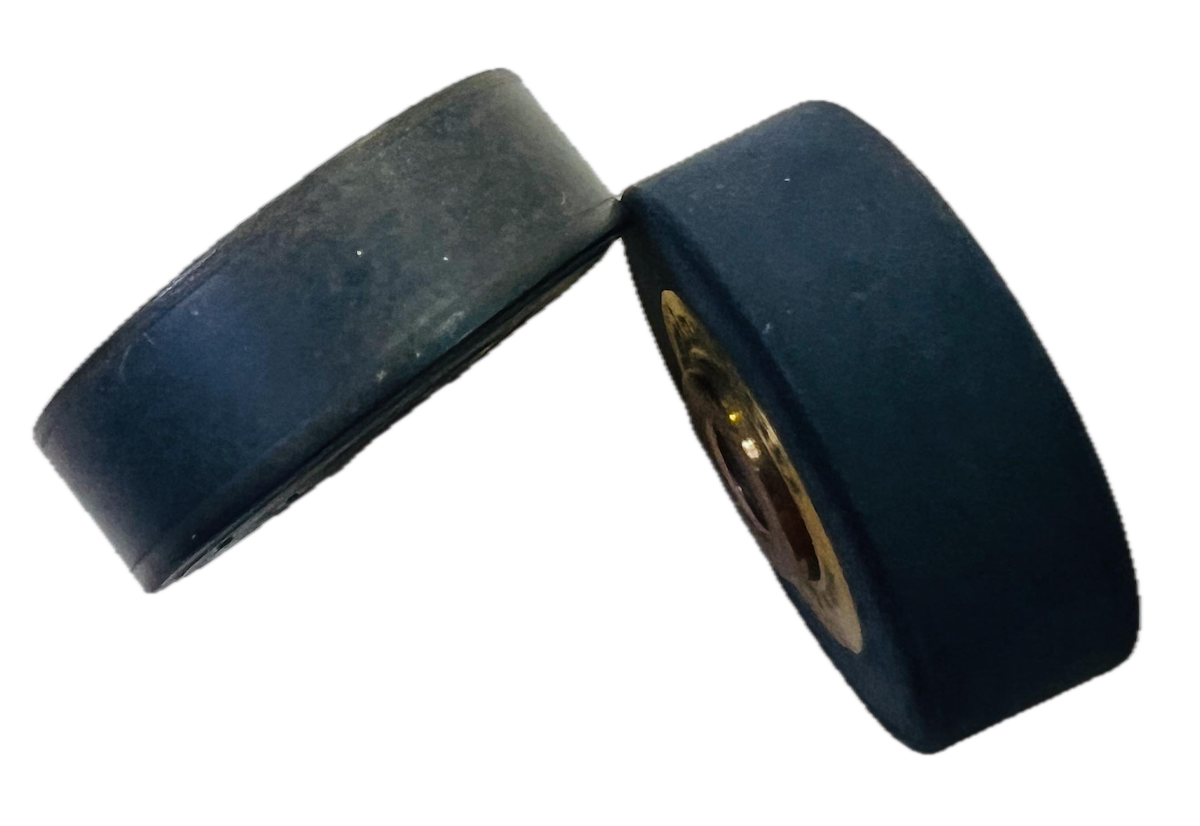
- Pinch rollers are replaced as a matter of course. ReelTape uses pinch rollers made by Heroms in Germany.
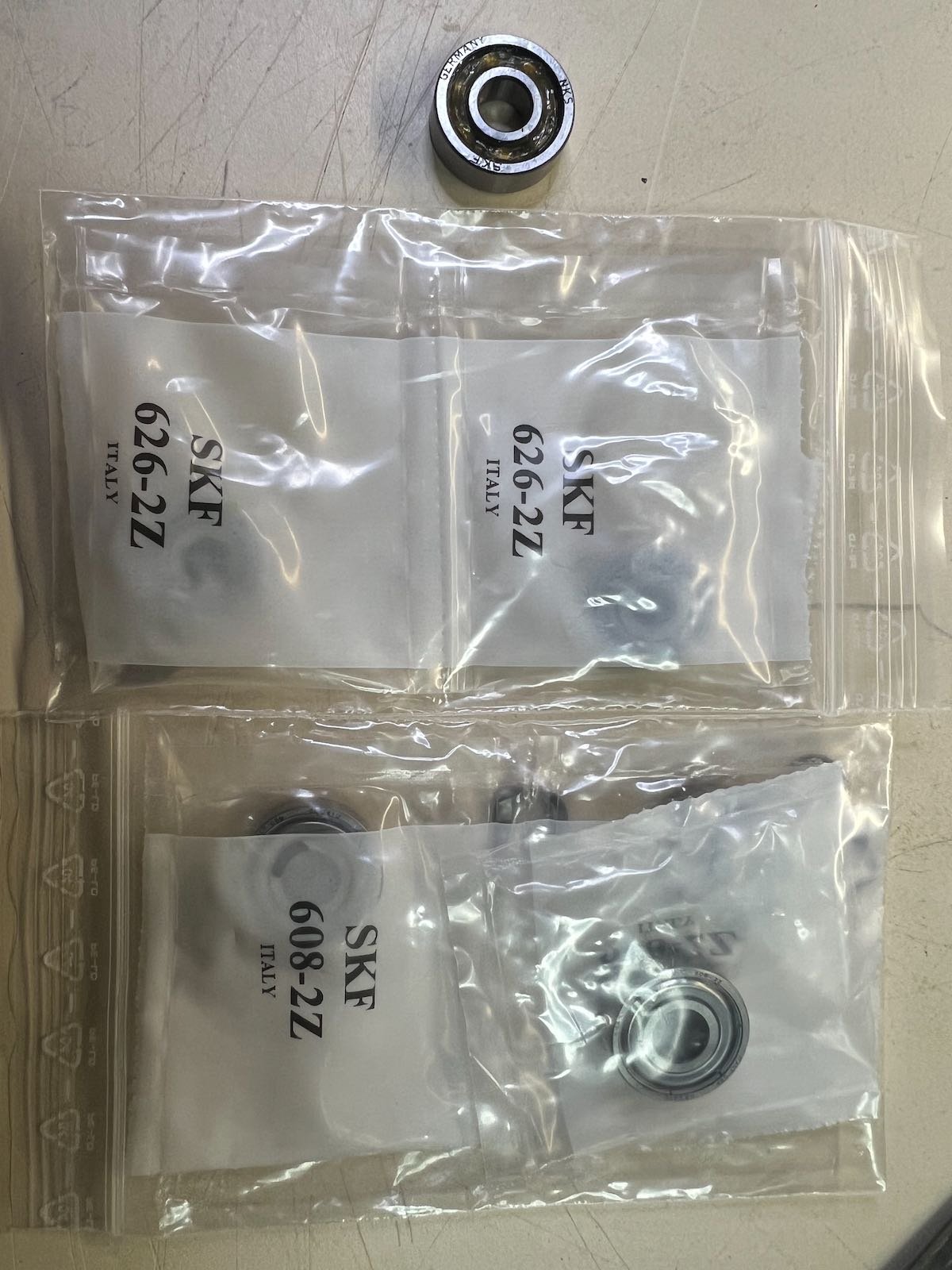
- All motor bearings (and rolling tape guides) are replaced by new ones from SFK.
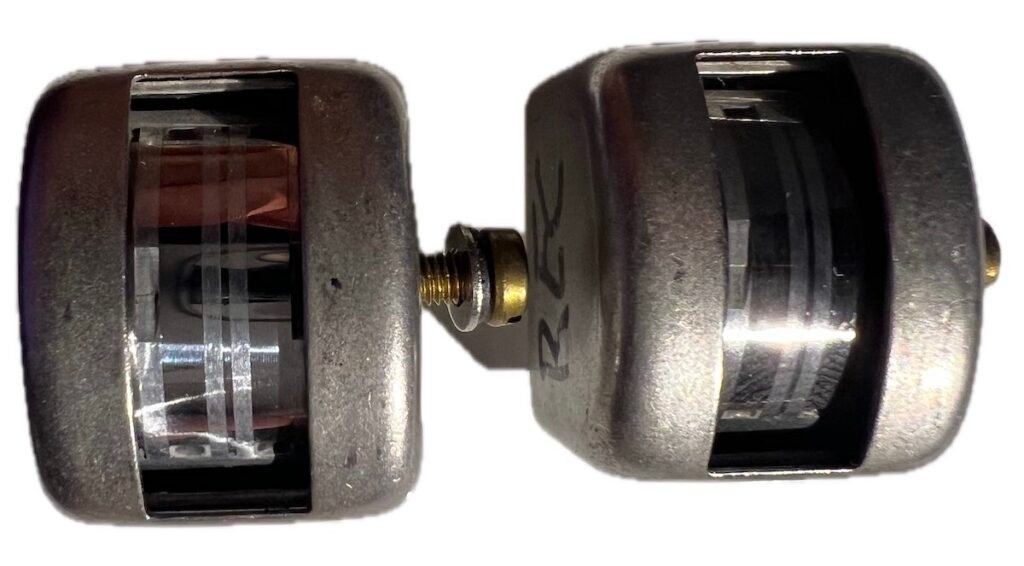
- Motor can capacitors are replaced, ensuring optimum torque.
- All Rifa and Frako capacitors are replaced. With age, these capacitors become hazardous and may, literally, explode releasing noxious fumes. The popping of these parts are, however, not damaging the machine.
- All electrolytic capacitors in the power supply are replaced.
- All electrolytic capacitors on the PCBs are replaced with Panasonic caps.
- Brake bands and coil springs are likewise replaced.
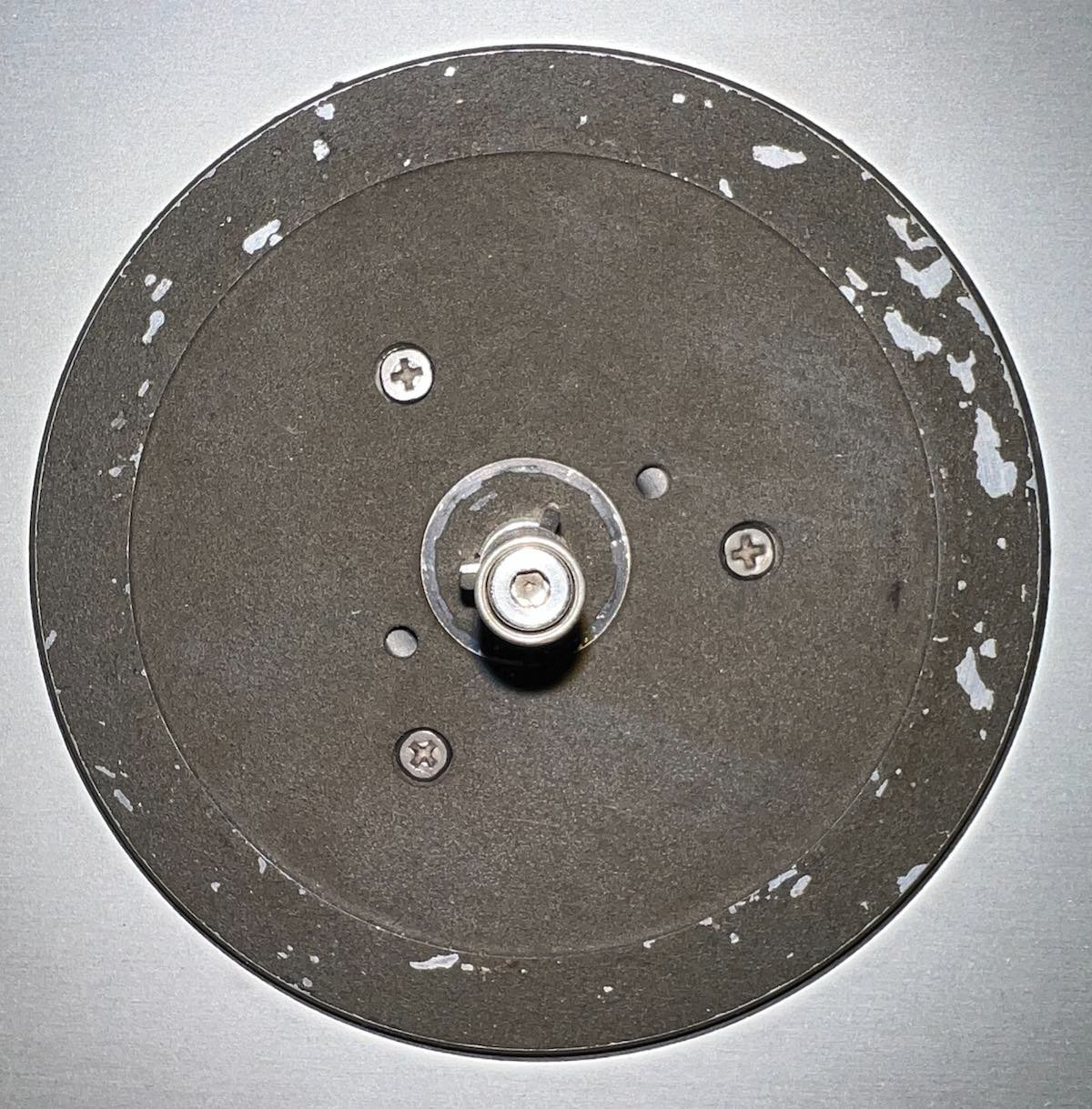
- Reel plates (often scratched by frequent use) are sent to Switzerland for repainting with Nextel (a process akin to alchemy) as originally used by Revox.
- (Revox) the easily breakable plastic levers of the toggle switches are replaced by metal ones.
- All rotary and sliding switches are cleaned and treated with D5.
- (Revox) VU LEDs replaced with “Kalt Weiß” (cool white).
- All fasteners (often oxidised) on the front plate (and when needed elsewhere) are replaced.
Before the start of the restoration process all functions of the machine are thoroughly tested and any faults or imperfections noted/registered. Only the above standard procedures have been completed, specific faults are addressed. Also, any cosmetic blemishes are noted and orders placed for replacement parts not stocked by ReelTape.
The recapping process constitutes the before-last stage of the restoration process. Modular cards are recapped one by one and tested in situ. After all cards have been recapped, the machine is fully operational and may now be adjusted mechanically and electronically. Also, any and all open-body trimmers will have been replaced by sealed modern trim potentiometers made by either Bourns or Piher.
Mechanical adjustments include the correct setting of the brake tension and pinch roller pressure. Capstan speed is adjusted by measuring the output and frequency of the tacho circuit. The relapped heads are adjusted for height and tilt.
The recorder is now ready for alignment. First the regulated and unregulated voltages are checked, followed by the adjustment of basic input and output off-tape levels which, in turn allows for the calibration of the VU meters and their peak level indicators. Next, the coarse and fine adjustment of the playback head’s azimuth is set with the help of a VTVM (coarse) and an oscilloscope (fine and phase check). Playback level and equalisation are set with the help of an alignment tape. The same basic procedure is followed for the record section from azimuth and bias to level and equalisation, using the chosen tape formula. Bias leakage is then minimised.
Record alignment is done on fresh RTM tape (usually SM911) and the entire procedure (both playback and record) is done twice to eliminate the possibility of fluke readings.
The machine is now fully restored and moves to the ReelTape mastering studio where it is hooked up and tested for actual – as opposed to measured – performance.
Why “recapping”?
Much has been said and written about recapping with some esteemed experts advising against the exercise (often calling it a “futile” endeavour). Others argue that all caps simply need to go since the value of these parts tends to drift over age.
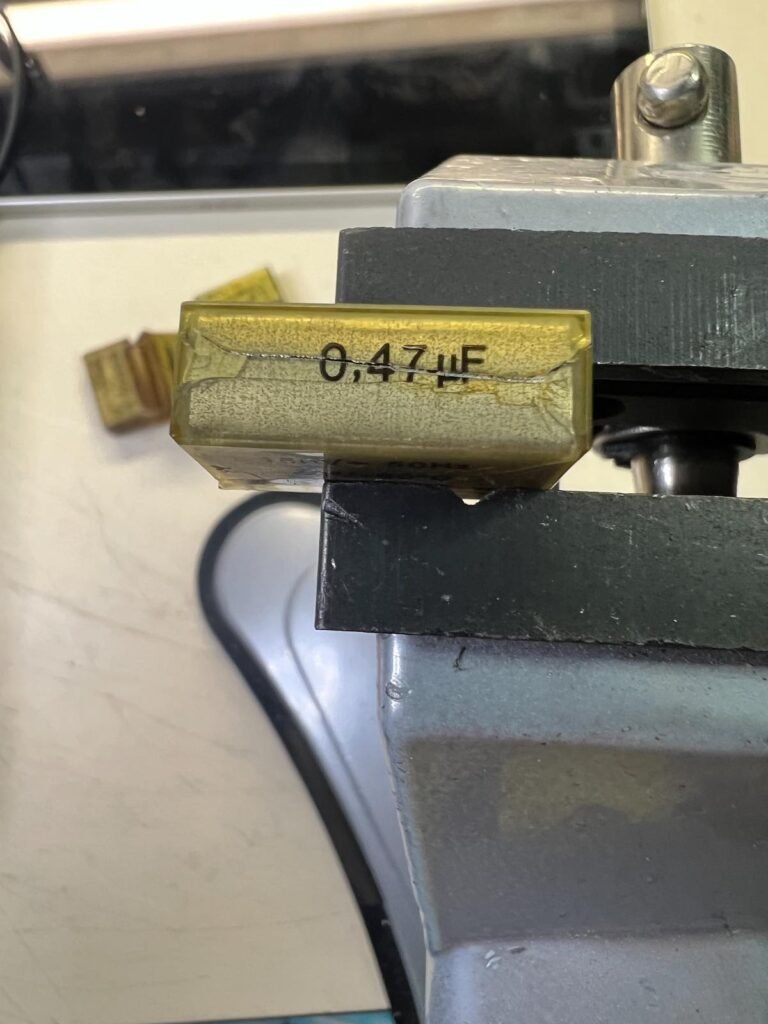
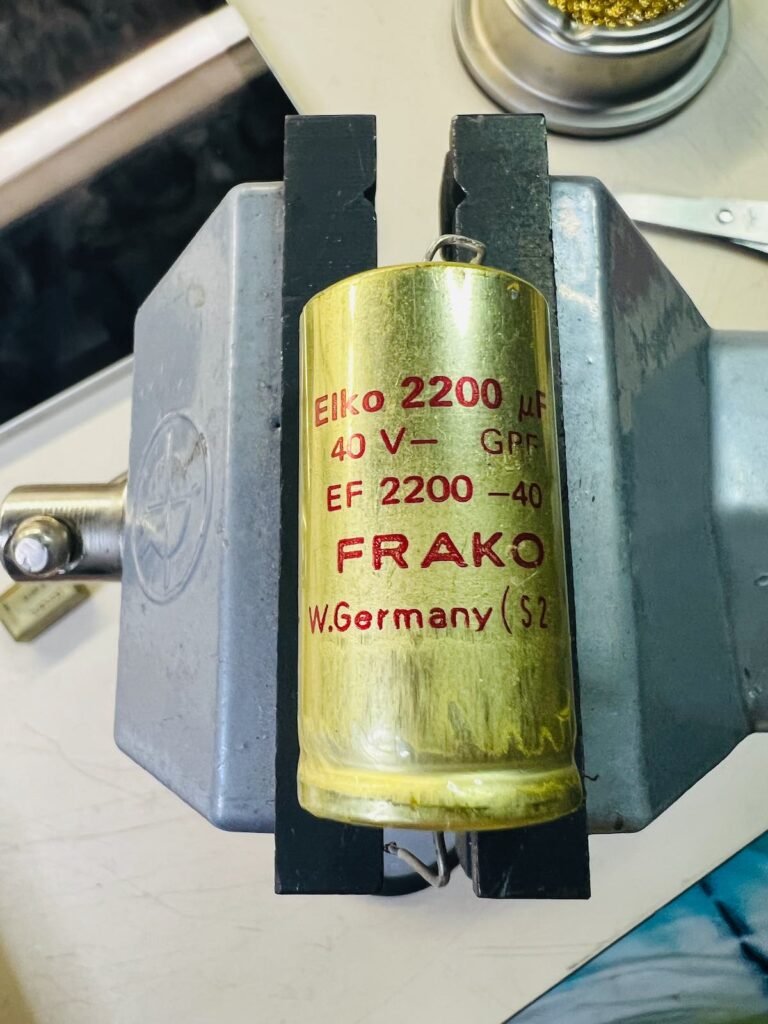
Testing old capacitors taken out of machine 30, 40, or 50 years old gives interesting results. Most capacitors still hold their original value. However, capacitance may drop significantly with the passage of time. Machines that have been in storage for a long time tend to suffer a dielectric breakdown as the oxide layer may thin.
That, however, is not the whole story. ESR ratings (equivalent series resistance) may have altered as well. This causes the capacitor to overheat when in use.
To illustrate the importance of a recap, I recall restoring a Revox PR99mkIII to perfection. The machine had an impressively flat frequency response on both channels with distortion measuring well below spec. However, during recording in ‘uncal’ mode (using the input level controls) a strange signal appeared on Channel 1 of about -15dB when opening the control. Curiously, that signal was absent in ‘cal’ mode. The oscilloscope showed the mysterious signal to carry a frequency of about 152kHz: The bias. It would (of course) disappear on the recording because even a restored Revox or Studer wouldn’t capture such a high frequency.
Swapping the input amp PCB with a known good one from another PR99mkIII, the bias interference disappeared. Examining the original input amp board, I soon noticed two electrolytic caps that for some reason had not been replaced (C106 & C206). Once these caps were taken out and replaced by new ones (47uF/25V), the problem had disappeared and the bias signal was banned from the circuit.
Problem solved and lesson learned: Replace All caps Always.
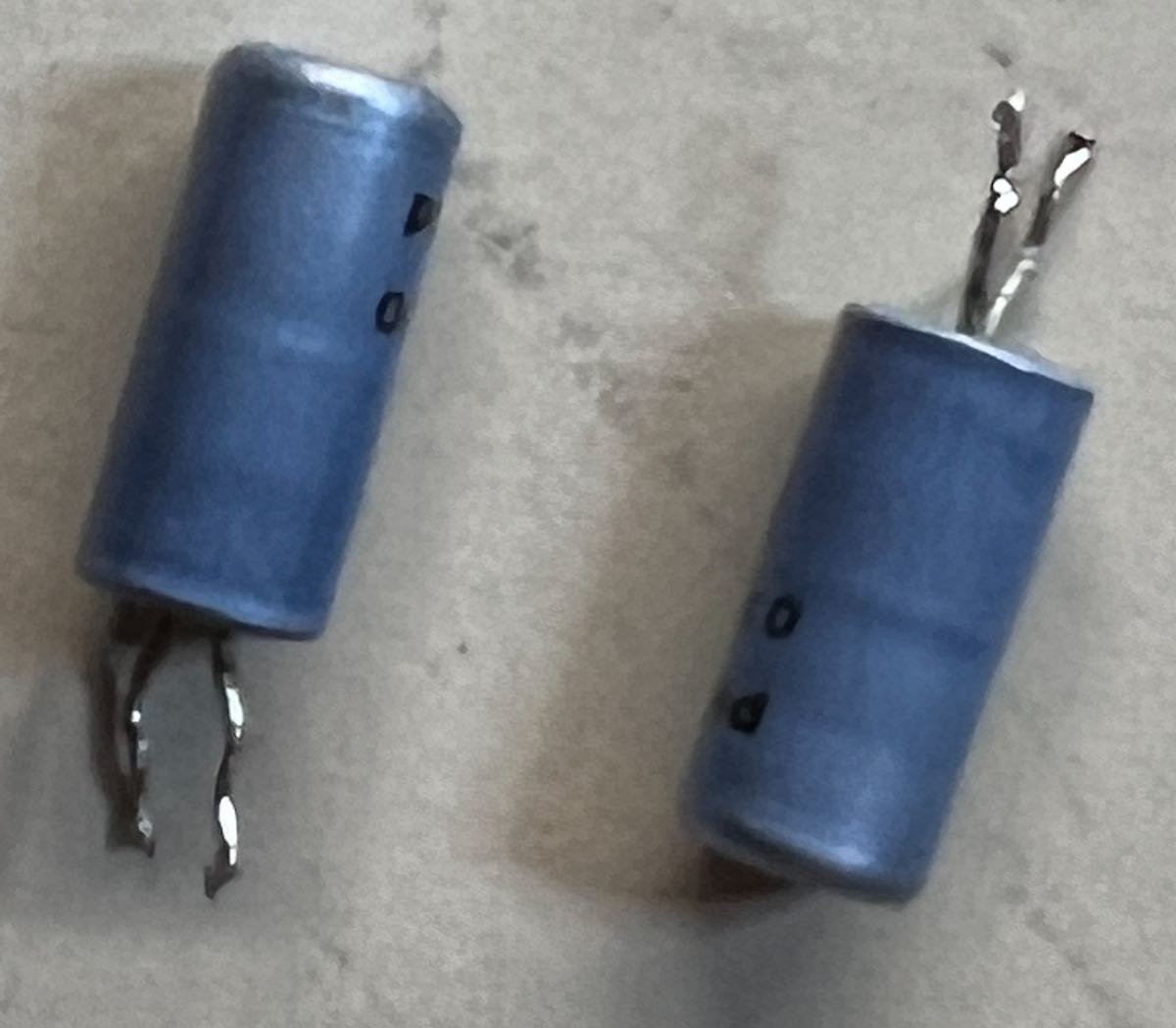
BTW, on the capacitance meter both offending caps measured roughly on spec.
Some brands are more susceptible to malfunction as others. Generally, Philips capacitors hold up well and remain reliable even after half a century. As mentioned, Rifas and Frakos are best removed and replaced on sight. On the other hand, ceramic and polysterene capacitors such as those found in equalization networks may be left in place and need not cause any concern.
In conclusion, during any restoration process ReelTape will replace all electrolytic capacitors in (modular) stages.